

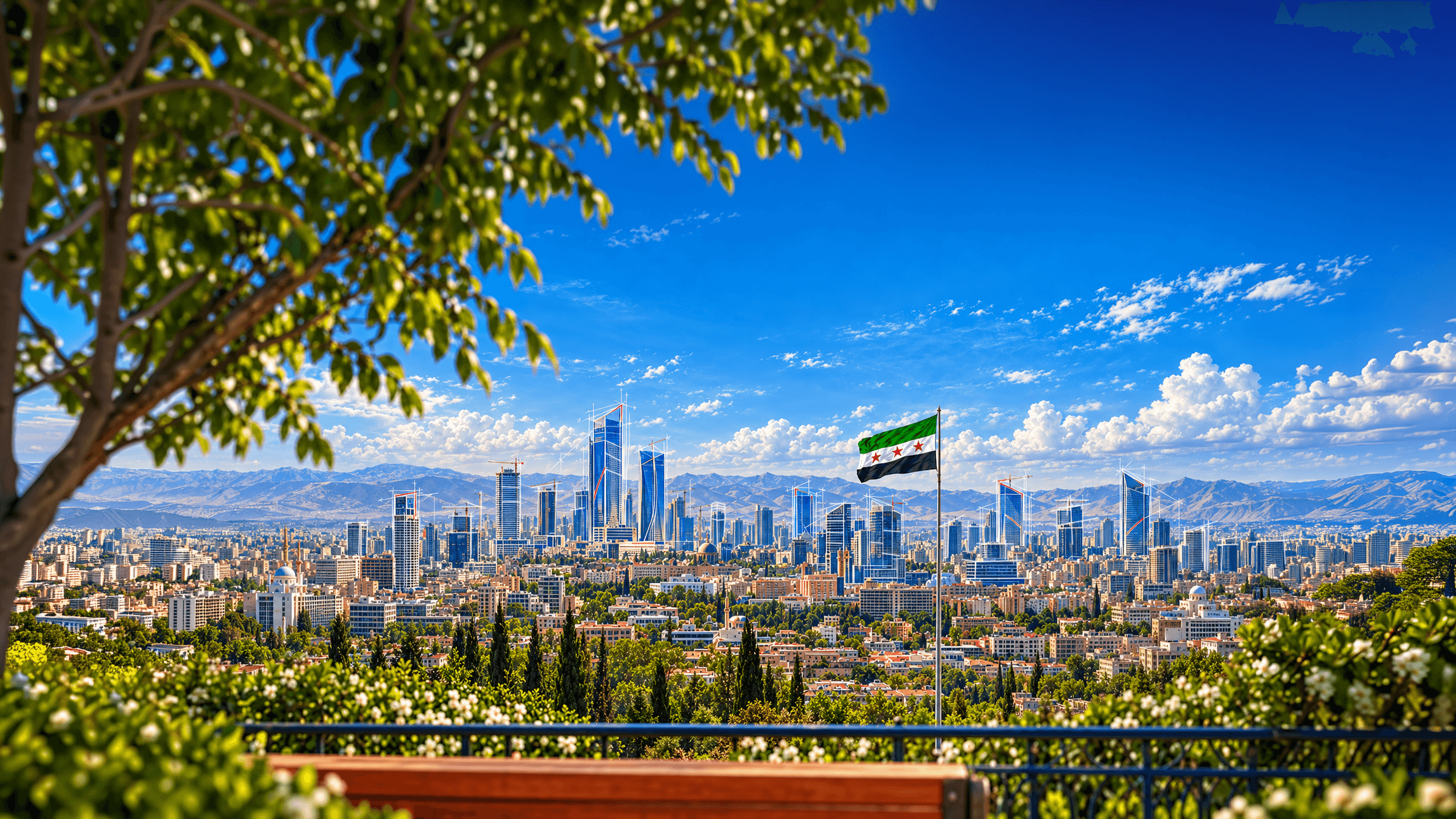
Vision and Strategy 2030
Governance
Sound governance is a basic pillar of any effective organisational structure in civil aviation, as it ensures transparency, efficiency, accountability and institutional discipline.
As part of rebuilding the General Authority of Civil Aviation and Air Transport, we have decided to adopt a modern, advanced governance model inspired by the experience of the Kingdom of Saudi Arabia, which, through its General Authority of Civil Aviation (GACA), succeeded in turning its aviation sector into a regional and international model of efficiency and innovation.
The proposed pillars of governance
- Institutional independence
- A clear organisational structure
- Transparency and accountability
- Commitment to international standards
- Human development and professionalism
Airport development
Syria has 5 main airports: Damascus, Aleppo, Latakia, Deir ez-Zor and Qamishli. Work will be done on the following:
Damascus Airport
Damascus Airport's current capacity is about 1.5 million passengers a year, so work will be done to develop it to reach about 2 million to 5 million passengers a year.
The aviation system will also be fully developed and rehabilitated, by building a new airport with a capacity of about 30 million passengers a year.
Aleppo Airport
Aleppo Airport's current capacity is about half a million passengers a year, so work will be done to develop it to reach about one million to 2 million passengers a year.
A new airport will also be built with a capacity of about 15 million passengers a year.
The other airports
The other airports will be developed until they reach the same standard as the main airports.
Investing in Mezzeh Airport
Mezzeh Airport will be converted from a military airport into a civil airport for businesspeople and officials, one of the innovative projects proposed. It can be developed into a private airport that also receives helicopters and electric aircraft, with an aviation community around it that includes hotel lounges for businesspeople and specialised MRO maintenance centres. This brings significant benefits because of its location in the capital, Damascus, and its closeness to all vital centres.
The idea builds on successful models such as Prince Mohammed bin Abdulaziz Airport in Medina, as well as the experience of the aviation zones in Riyadh and Jeddah.
Converting Palmyra Airport into a civil airport for tourism
As part of the airport development plan, the Authority is working with the Ministries of Culture and Tourism and Homs Governorate to convert Palmyra Airport from a military airport into a civil airport dedicated to serving tourism in the ancient city. The initial vision is to bring the airport into service within six months to a year; its international certification and the completion of its technical requirements, such as navigation aids and radars, will take longer, turning it from a local into an international airport. The plan is being updated to suit the present situation and the requirements of the coming stage, so that visitors reach Palmyra and its historical and archaeological sites more easily and its tourism assets are strengthened.
The project stands beside the Mezzeh Airport plan within an integrated development vision that aims to diversify the types of aviation in Syria, ease the operational load on Damascus International Airport, and create specialised points of attraction for investment and trade. The plan does not include converting another military airport in Homs Governorate, on grounds of economic viability: the governorate lies within 200 km of the airports of Damascus, Aleppo, Latakia and Deir ez-Zor, and about 160 km from Palmyra Airport.
The Air Cargo Village initiative
A specialised economic zone at airports for handling air cargo and providing integrated logistics services. The cargo village experience at airports in the Kingdom of Saudi Arabia has been a success, and those villages have in turn become regional cargo hubs.
Its main benefits:
Economic
- Boosting foreign trade
- Attracting logistics investment
- Creating thousands of jobs
Logistics
- Faster clearance and transport
- Supporting e-commerce
Development
- Developing infrastructure
- Establishing industrial and free zones
International
- Putting Syria back on the global air cargo map
- Strengthening cooperation with global companies
Air navigation
Syria has an important geographic and strategic location, as the link between Asia and Europe. For that reason the Syrian state will work to secure its airspace so that it can be used in several sectors, which leads to attracting investment companies in this field.
Electronic Aeronautical Information Publication (eAIP)Developing the national carrier in Syrian civil aviation
Rebuilding a modern, safe and sustainable Syrian civil aviation that supports the national economy and puts Syria back on the regional and international air map.
Fleet modernisation
- Rehabilitating civil aviation in Syria for Syrian Air (the national carrier), following a modern approach that takes efficiency and safety into account.
- Maintaining and modernising the current aircraft, such as the Airbus A320, to ensure their operational readiness.
- Gradually expanding the aircraft fleet, noting that the current fleet is no more than 3 to 4 aircraft.
- Increasing the number of destinations served by national airlines, especially in the Arab region and global destinations.
Encouraging private national airlines
- Supporting the establishment of national low-cost carriers to strengthen competition and lower ticket prices.
- Enabling the private sector to contribute to developing the air transport sector.
Developing human resources and training
Rehabilitating technical staff and pilots through comprehensive training programmes, in cooperation with leading Saudi expertise in aviation training, to transfer knowledge and build national capacity, including:
- Retraining pilots.
- Qualifying aircraft maintenance engineers.
- Developing the skills of air traffic control staff.
- Developing and training the ground and in-flight hospitality team.
- Aircraft maintenance.
- Airport management.
Sustainability
Bringing investment to modern, internationally recognised airlines will achieve the main points of sustainability, which are:
Modern technologies
- More efficient aircraft
- Lightweight materials
- Advanced engines
Alternative fuel
- Biofuel
- Hydrogen
- Electricity (for short distances)
Optimal operation
- Better routes
- Shorter waiting times
- Efficient fuel management
Closing message
Syria is taking off again… and we welcome you as partners on this journey
We in Syria believe that the future of the region is built on integration, not competition, and on partnership, not isolation.
We affirm that our doors are open to investment, which safeguards the interests of investors and national sovereignty and strengthens Arab links, especially at this stage that is redrawing the region's features with a new realism and fruitful cooperation.